

Website Pfizer
Organizational Context: The Mission of UNFPA
UNFPA operates under the mandate to deliver a world where every pregnancy is wanted, every childbirth is safe, and every young person’s potential is fulfilled. The agency works in over 150 countries, focusing on three transformative results: ending unmet need for family planning, ending preventable maternal deaths, and ending gender-based violence and harmful practices. An internship with UNFPA is not an administrative role but an entry point into the mechanics of global advocacy, programmatic design, humanitarian response, and data-driven policy support. Interns are integrated into teams tackling some of the most sensitive and pressing challenges in sustainable development.
Structure of a UNFPA Remote Internship
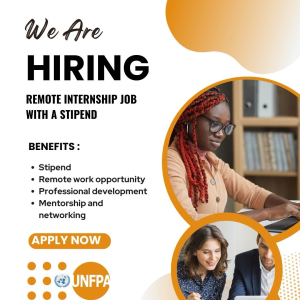
The “Remote Internship Job with a Stipend” announcement indicates a formal, structured program designed to be accessible globally while providing tangible support to participants.
Primary Purpose: To provide a practical learning experience for students and recent graduates, allowing them to develop their skills in an international context, contribute to the substantive work of UNFPA, and gain exposure to the principles and operations of the United Nations system.
Typical Duration: UNFPA internships usually last between 2 to 6 months, often aligned with academic semesters or quarters. Remote arrangements provide flexibility but require a high degree of self-discipline and reliable digital connectivity.
Detailed Breakdown of Announced Benefits
The listed benefits are central to the internship’s value proposition and define the experience beyond the daily tasks.
-
Stipend: A fixed financial contribution is provided to help offset expenses. It is essential to understand that this is not a salary but a subsistence allowance. The amount is standardized and is intended to make the internship accessible to candidates from diverse economic backgrounds, though it may not cover all living costs, especially in high-expense locations.
-
Remote Work Opportunity: This removes geographic and financial barriers to entry, allowing talented individuals from anywhere in the world to contribute. It demands proficiency in digital collaboration tools (Microsoft Teams, SharePoint, Zoom) and the ability to manage time effectively across potential time zones.
-
Professional Development: This is the core of the internship. Development occurs through:
-
Substantive Work Assignments: Interns are assigned real tasks relevant to their team’s mission, such as drafting briefing notes, conducting research, analyzing data, supporting event organization, or contributing to communication materials.
-
Exposure to UN Processes: Direct insight into how a UN agency operates, including programming cycles, inter-agency collaboration, and reporting mechanisms.
-
-
Mentorship and Networking:
-
Mentorship: Interns are typically assigned a supervisor who provides guidance on tasks, offers career advice, and facilitates learning about the wider UN system.
-
Networking: The internship offers unparalleled access to a global network of professionals in public health, development, human rights, and international relations. This includes connections within UNFPA and, through virtual events and collaborations, across other UN agencies and partner organizations.
-
Potential Internship Focus Areas
Internship opportunities align with UNFPA’s strategic divisions. Remote interns are often placed in Headquarters (New York or regional offices) or Country Office support roles. Common thematic areas include:
-
Sexual and Reproductive Health (SRH): Supporting research on maternal health, family planning programs, or adolescent health initiatives.
-
Gender Equality & Human Rights: Assisting with projects focused on preventing gender-based violence, promoting women’s empowerment, or engaging men and boys.
-
Population & Development Data: Working with demographers and data analysts on census support, demographic analysis, or sustainable development goal (SDG) monitoring.
-
Communications & Advocacy: Contributing to social media campaigns, drafting web content, preparing press materials, or supporting youth advocacy networks.
-
Humanitarian Response: Assisting teams that plan and implement SRH and protection services in crisis-affected settings.
-
Management & Operations: Gaining experience in finance, human resources, procurement, or IT within an international organization.
Core Qualifications and Applicant Profile
UNFPA seeks candidates who are not only academically strong but also deeply aligned with its principles.
-
Academic Requirements: Enrollment in a graduate program (Master’s or PhD) or completion of such a program within one year of the internship’s start date. In some cases, exceptional undergraduates in their final year may be considered.
-
Field of Study: Relevant disciplines include Public Health, International Development, Gender Studies, Demography, Economics, Social Sciences, Communications, or Business Administration.
-
Language Proficiency: Fluent English is mandatory for most positions. Proficiency in another UN official language (French, Spanish, Arabic, Russian, Chinese) is a significant asset and often required for specific regional offices.
-
Core Competencies:
-
Cultural Sensitivity and Adaptability: Ability to work respectfully and effectively in a multicultural, multi-ethnic environment.
-
Commitment to UN Values: Demonstrated alignment with the principles of the United Nations Charter and UNFPA’s mandate.
-
Strong Research and Writing Skills: The ability to synthesize complex information into clear, concise documents.
-
Initiative and Technological Comfort: A self-starter who can work independently in a remote setting and navigate digital platforms proficiently.
-
The Application and Selection Process
The process is highly competitive, emphasizing competency-based assessment.
-
Portal Application: All applications must be submitted through the UNFPA Careers portal or the UN Inspira recruitment system. A complete application typically includes:
-
A detailed Personal History Profile (PHP)/resume.
-
A comprehensive cover letter.
-
Academic transcripts.
-
-
Application Strategy:
-
Tailor Your Materials: Your cover letter must explicitly connect your skills and passions to UNFPA’s mandate. Mention specific programmes or reports that inspire you.
-
Use UN Language: Frame your experiences using key competencies from the UN system, such as “accountability,” “inclusive collaboration,” and “results-based management.”
-
Be Specific: If applying to a generic internship call, indicate your top 2-3 thematic areas of interest.
-
-
Interview Process: If shortlisted, you can expect a competency-based video interview focusing on your knowledge of UNFPA’s work, your technical skills, and scenarios testing your judgment and teamwork abilities.
Long-Term Career Value and Considerations
An internship with UNFPA is a strategic career investment with profound implications.
-
Pathway to a UN Career: While an internship does not guarantee permanent employment, it is one of the most credible and common pathways into the UN system. It provides the experience and internal network critical for securing consultancies or staff positions later.
-
Skill Development: Gains in project management, policy analysis, international stakeholder engagement, and professional writing are highly transferable to governments, NGOs, academia, and the private sector.
-
Considerations: The stipend is modest. The remote nature, while flexible, requires exceptional self-motivation. The bureaucracy of a large multilateral organization can be complex to navigate.
To apply for this job please visit lnkd.in.